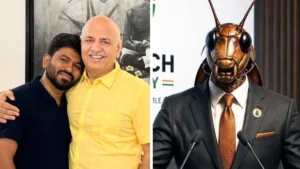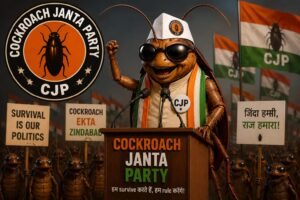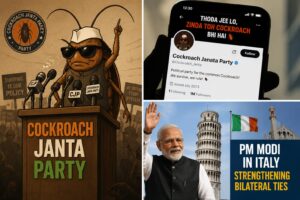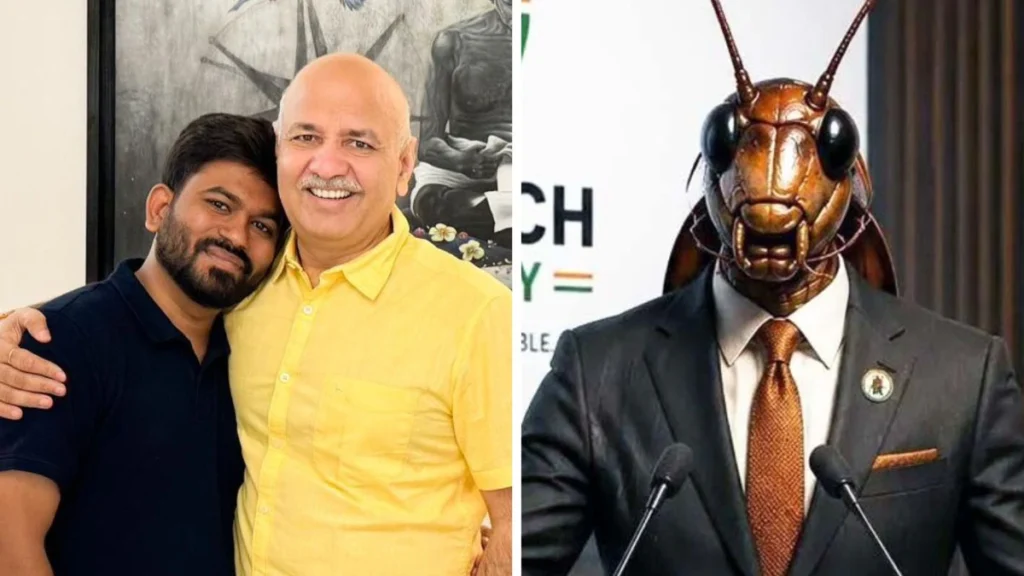
The sudden rise of the Cockroach Janta Party (CJP) has become one of the most talked-about topics online. Through memes, satire, and funny political content, the movement quickly caught the attention of many young people. A lot of users believed it was a fresh youth-driven movement expressing anger over issues like unemployment and exam controversies. But now, a new twist has changed the discussion.
Questions Raised About Abhijeet Dipke
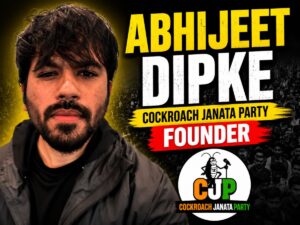
The biggest talking point is linked to Abhijeet Dipke, the founder behind CJP. Questions are being raised because of his past connection with political communication work. This has created a larger debate: was CJP truly a spontaneous movement started by frustrated youth, or was there a planned strategy behind it?
The discussion became stronger after people started looking at the timeline and online activity around the campaign. Many are now trying to understand whether the movement was carefully designed from the beginning.
Why the “Cockroach” Symbol Created Attention?
Political symbols often carry a hidden message. In the case of the Cockroach Janta Party, the use of a cockroach as a symbol immediately grabbed attention.
Read also:- Cockroach Janta Party Nears 20 Million Followers, Raising Questions About Youth Mood And Politics Today
The idea behind the symbol appears unusual because cockroaches are often described as creatures that survive even in difficult situations. This created a satirical image that connected with meme culture and younger audiences.
Unlike traditional political branding, this style looked more playful and internet-friendly. That helped CJP spread rapidly among Gen-Z users.
Is Gen-Z Being Targeted Through Meme Politics?
Young people today consume information differently. Short videos, memes, and humorous content often travel faster than long political speeches.
This situation has raised an important question: are political campaigns now entering a new era of meme politics?
Many youngsters connect more with funny content than with traditional campaign methods. Political messaging mixed with jokes and satire can become powerful because it feels casual and relatable.
The rise of CJP has shown how digital culture is changing the way political conversations happen online.
Is India Entering a New Age of Political Marketing?
The larger issue goes beyond one movement. The bigger question is whether political campaigns are now shifting toward digital storytelling and meme warfare.
Today, social media trends can grow faster than television debates. A simple meme can reach millions of people within hours. Because of this, digital campaigns are becoming more creative and more influential.
Whether Cockroach Janta Party was an independent youth voice or a carefully planned campaign, one thing is clear: internet culture and politics are now becoming deeply connected.
The real debate is no longer only about CJP. It is about how political communication may look in the future and how young audiences will shape that change.