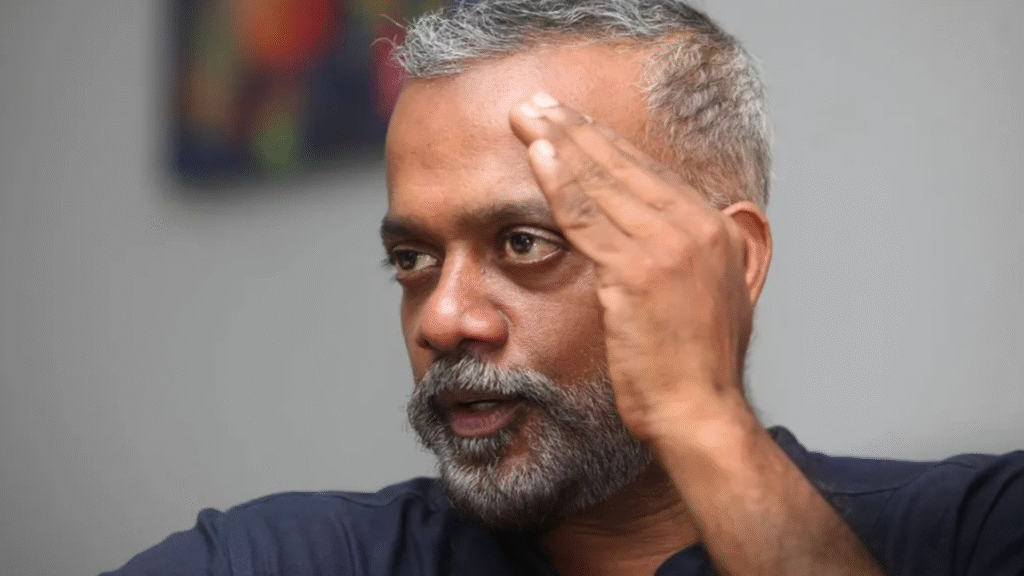
Filmmaker Gautham Menon has received a major legal setback after the Madras High Court ordered him and his production company to refund ₹4.25 crore to a film financier. The court also directed that 12% interest be paid on the amount.
A division bench of the court reviewed the case and decided to dismiss the appeal filed by Gautham Menon and his company, Photon Factory. This means the earlier court order from 2022 will remain in place.
What the Case Was About
The issue goes back to a 2008 agreement for producing a Tamil film. Under this deal, the financier, RS Infotainment, agreed to invest ₹13.5 crore into the project. The film was planned to start in December 2008 and finish by April 2009.
Out of the total amount, ₹4.25 crore was paid to Gautham Menon’s production team, including an advance of ₹2.5 crore. However, the project never moved forward as planned.
Later, the financier filed a case to recover the money, claiming that the film was never even started despite the payment.
Arguments by Gautham Menon’s Side
In court, Gautham Menon and his team argued that the financier did not complete the full payment as promised. They said that only part of the money was given, which created problems in continuing the project.
They also claimed that the funds received were used for production-related work. Additionally, they mentioned that the project was later revived and released as the film “Nee Thane En Pon Vasantham.”
Why the Court Rejected the Defence
The court did not accept these arguments. It clearly stated that Gautham Menon and his company failed to provide proper proof that the film had even started.
Read More:- Badshah reportedly marries Isha Rikhi six years after divorce wedding photos and rituals surface online
The judges pointed out that there was no strong evidence, such as valid documents or records, to show that the money was used for the agreed project. The court also said that the vouchers and bills presented were not legally proven.
Court’s View on Contract Violation
The High Court made it clear that Gautham Menon’s team did not follow the timeline mentioned in the agreement. The production was supposed to begin within a fixed period, but this did not happen.
The court also rejected the claim that the later film fulfilled the original agreement. It said that the producers tried to avoid responsibility by changing company roles and structures.
This decision is an important reminder for the film industry about the importance of clear agreements and timely execution. For Gautham Menon, it is a significant legal challenge that highlights how delays and lack of proof can lead to serious consequences.

Author: Purnima s
Purnima | Entertainment Blogger 4+ yrs writing fun blogs on movies, celebs & trends. Pop culture addict serving fresh, binge-worthy content!